It all began with a young Hans Wilsdorf. Born in Germany in 1881, he would go on to create one of the greatest watch brands the world has ever known. The Wilsdorf family ran an iron toolmaking business, providing them with a stable income. However, when Wilsdorf was just 12 years old, tragedy struck: he became an orphan after the passing of both his parents, Anna and Johan. Shortly after, the family chose to sell the toolmaking business to secure their future.
Wilsdorf spent the remainder of his youth at an elite boarding school before beginning an apprenticeship with a pearl exporter in Geneva. It was there that he first learned the valuable principle that a successful business could be built using components crafted by others - a lesson that would later become fundamental to his own watchmaking journey.
THE BEGINNING OF HIS WATCH STORY
Wilsdorf then moved to a town in the Jura Mountains; an area of Switzerland renowned for its watchmaking heritage - where he secured a position with a well-known watch exporter. One of his main duties was to manually wind hundreds of pocket watches each day. This seemingly simple task became another key milestone in his early journey, reflecting the discipline and attention to detail that would later define his accomplishments.
After his time there, Wilsdorf returned to Germany to complete his mandatory military service. Once fulfilled, he took another decisive turn and moved to London, where he began working for a watchmaker. Just two years later, in 1905, Wilsdorf took a bold leap and founded his own watchmaking business with his brother-in-law, Alfred Davis. They established their offices in none other than Hatton Garden - today a hub for jewellers and watch traders.
At the time, their business model was simple yet effective: they sourced high-quality Swiss movements and placed them into English-made watch cases. The company was named Wilsdorf & Davis.
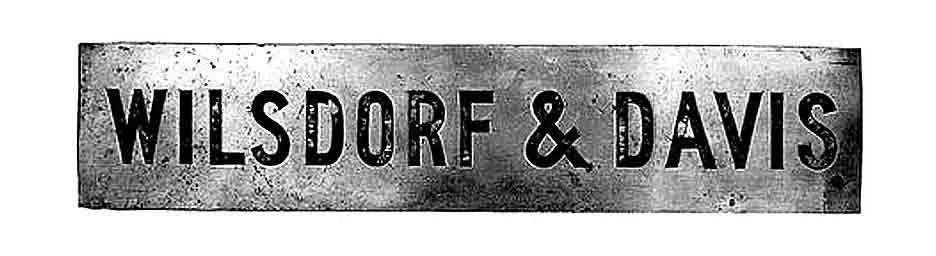
A few years later, Wilsdorf took a bold and unconventional turn by shifting his focus toward wristwatches; an idea that was highly unpopular at the time and largely associated with women’s fashion. He soon partnered with a Swiss manufacturer capable of producing movements small enough to fit inside these more compact timepieces. With this new direction, Wilsdorf felt the company needed a fresh name - something short, memorable, and reflective of the brand’s distinct identity. There was no dramatic origin story behind it; as Wilsdorf himself explained, the name simply came to him one day. And so, he chose the name we all know so well today: ROLEX.
In the years that followed, throughout the 1910s, Rolex began reaching new heights. Their watches earned numerous awards for excellence and received certificates recognising their exceptional precision. The name “Rolex” spread quickly, and the brand’s reputation grew stronger with each achievement. At this time, the company was still based in London, but the outbreak of the First World War changed everything. During the war, the British government introduced heavy customs duties and import charges - an enormous obstacle for Rolex, which was already a well-established business exporting watches across the world.
As a result, Wilsdorf made the decision to relocate the company’s operations to the world’s watchmaking capital - Switzerland. In 1920, Rolex was officially registered in Geneva, marking the beginning of its new chapter at the heart of horology.
THE ROLEX WAR EFFORT
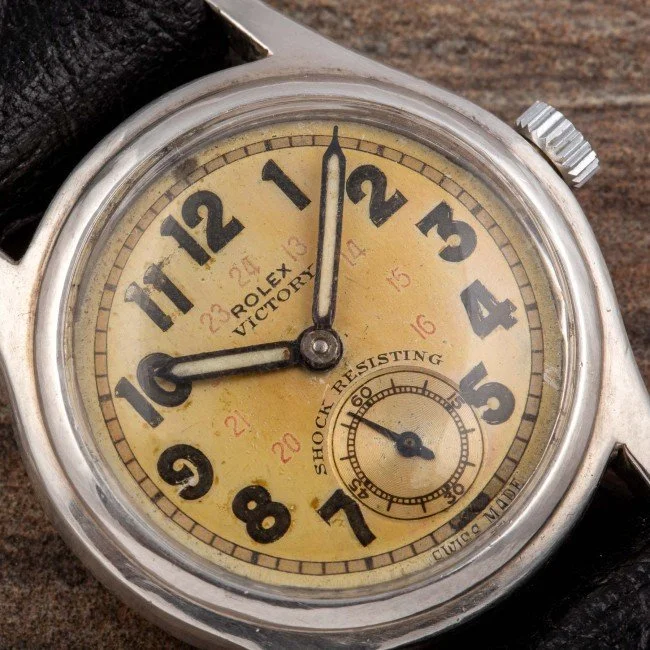
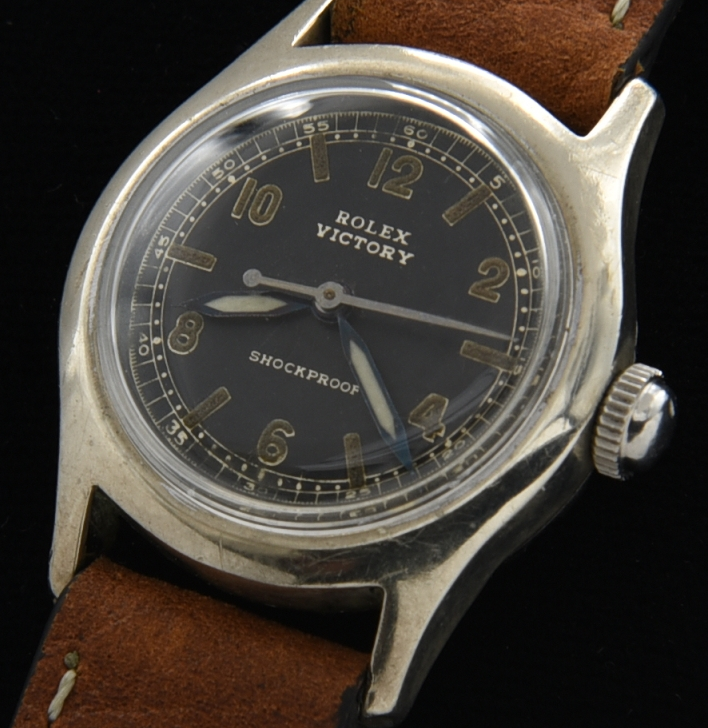
Despite Hans Wilsdorf’s German upbringing, he was firmly opposed to the Nazi regime. As a gesture of appreciation toward the British during the Second World War, Wilsdorf publicly declared that any British soldier could purchase a Rolex watch and would not have to pay a penny until after the war. Soldiers were free to choose any model they wished, placing their orders through the International Red Cross.
When the gruelling conflict finally ended, it came time for Rolex to collect payment. Remarkably, the company did not chase a single invoice - yet it is said that every Rolex issued during the war was paid for, even by the families of soldiers who never made it home. It stands as a powerful testament to Rolex’s generosity and its unwavering commitment to supporting the British during one of history’s darkest chapters.
ROLEX TODay
Over a century later, the Rolex name has only continued to grow. It has become the most recognisable brand in the entire watch world. Ask almost anyone to name a watch company, and I can almost guarantee that “Rolex” will be the first name that comes to mind. It is undeniably one of the greatest luxury brands ever established, responsible for some of the most desirable timepieces in history.
Today, however, Rolex represents something quite different from what it once was. The brand has become a global symbol of status, and many of its models are now incredibly difficult to obtain. There was a time when a soldier could buy a Rolex, and not pay for it for years. Now, you often can’t even walk into a boutique and purchase certain models at all. To some, it feels as though the company has drifted from the values and accessibility that defined it in its early days - no longer quite the same brand Hans Wilsdorf founded.
Even so, Rolex remains more innovative than ever, creating exceptional modern pieces like the Land-Dweller and constantly striving for improvement. Despite its evolution, the brand still holds fast to its classic designs, its unmistakable crown, and its place among the finest watchmakers in the world. It continues to honour the legacy of Hans Wilsdorf, one of the most influential figures in horology.