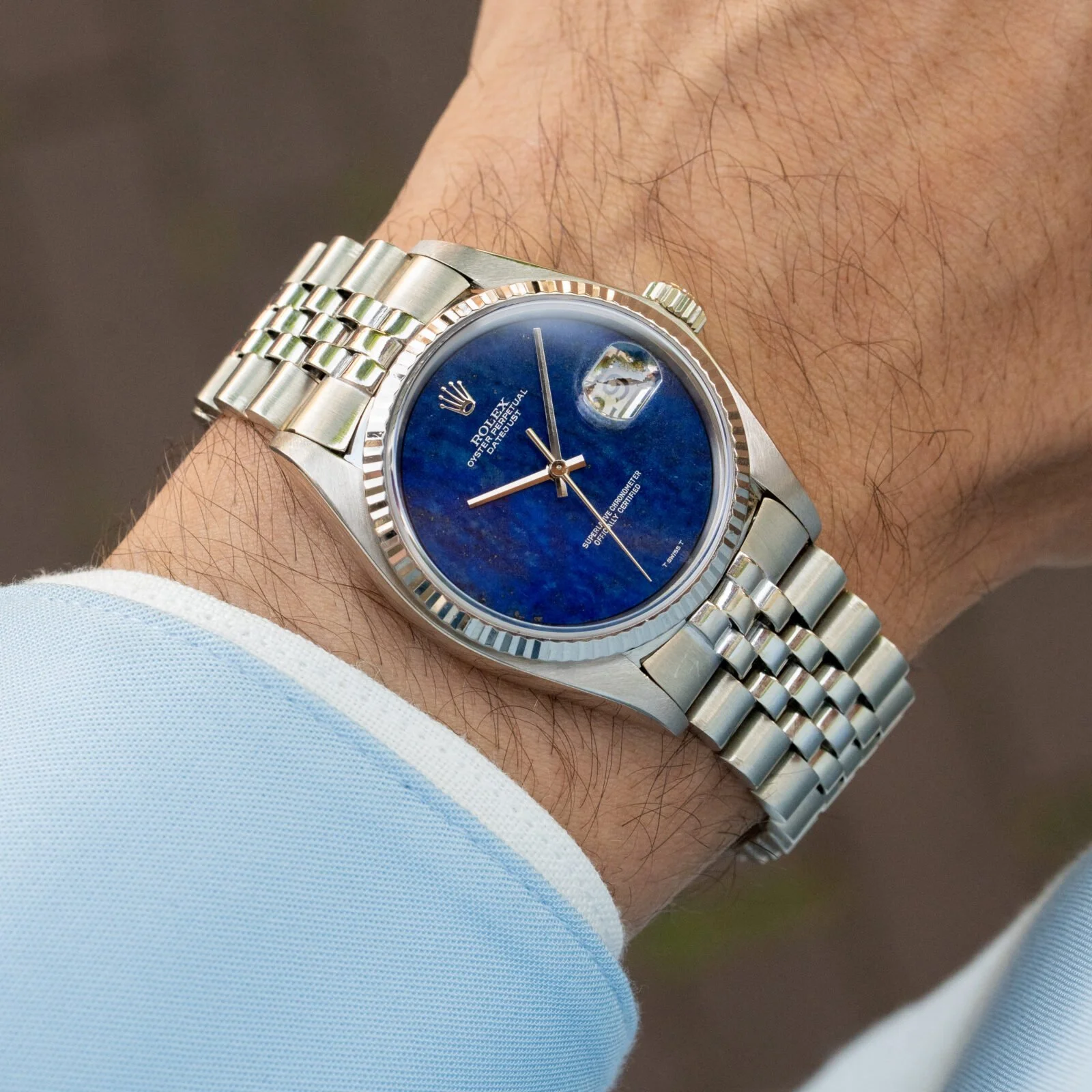
The Rolex 1601 Uncovered
The Rolex Datejust reference 1601 is undoubtedly one of the most recognisable vintage Datejust references Rolex ever produced. Made from around 1959/60 until the late 1970s, it features the classic 36mm Oyster case with a fluted bezel. The 1601 was offered on either an Oyster or Jubilee bracelet and came with a range of dial variations, meaning there's something to suit almost every style and preference. The 1601 remains very popular amongst vintage watch fans for it’s classic design, helping define the modern Datejust aesthetic.
It houses either a 1565 or 1575 movement. Both are stamped “1570” on the movement, which can make it difficult to distinguish between the two. While the calibres are closely related, they are not the same; the 1565 is the earlier version, with the 1575 being the upgraded movement introduced later. Rolex made the switch to the 1575 around the mid-1960s, bringing an increased power reserve, a hacking function and other improvements. The hacking feature is usually the easiest way to tell the two movements apart. This is a function that stops the seconds hand when you pull the crown out to set the time. The 1575 was also used in the Rolex Submariner reference 1680, better known as the “Red Sub”, which we covered in one of our previous blogs.
Different Variants
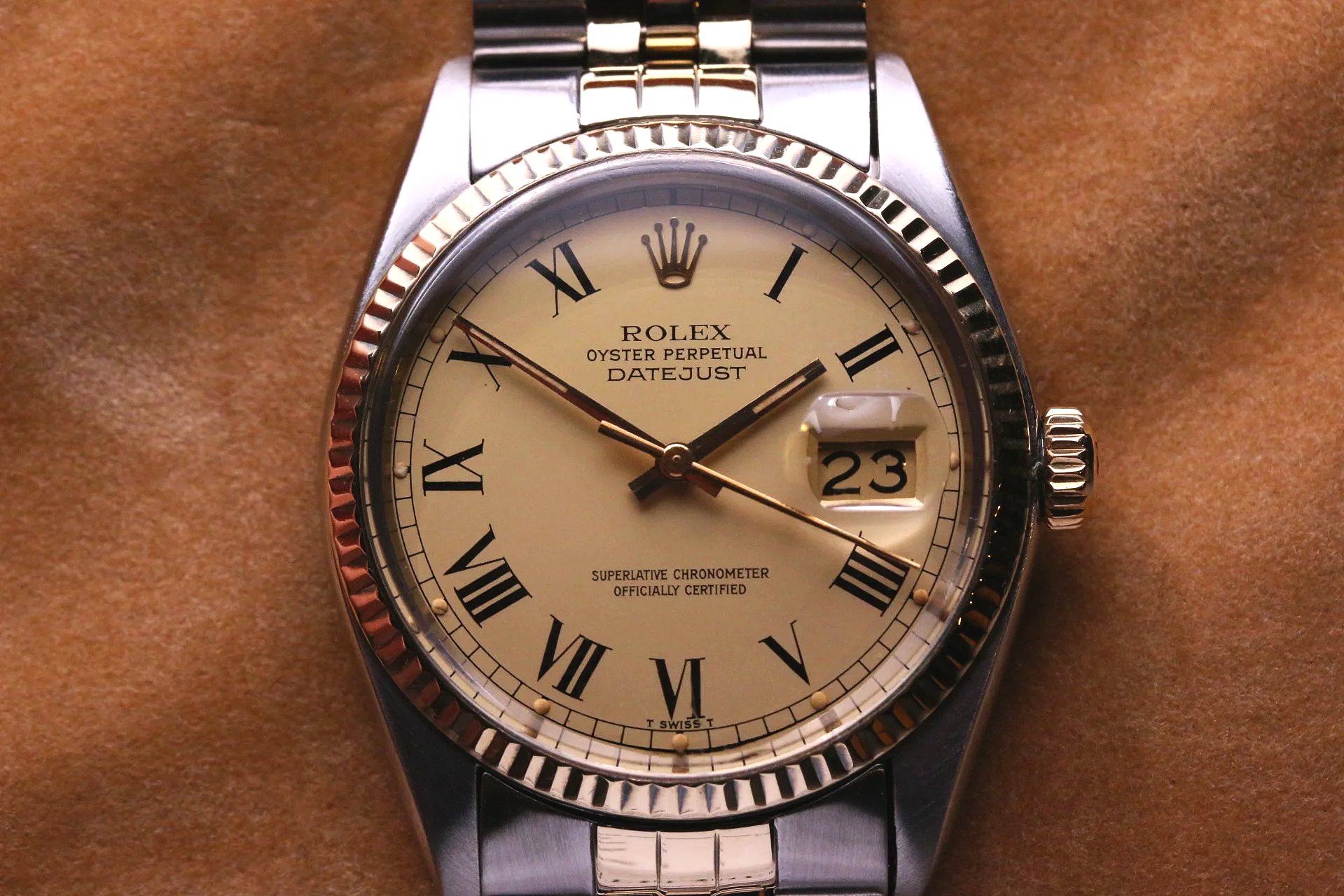
The 1601 was most commonly available in stainless steel with a white-gold fluted bezel, or in steel and yellow gold (two-tone). Full-gold examples were also produced, although these were much rarer, with full yellow, white and rose gold variants available. Alongside these variations, the 1601 was offered with numerous dial options, including Buckley, pie-pan, linen and Sigma dials, as well as stone dials such as malachite, lapis and onyx. This makes the 1601 a reference with a broad number of different configurations. These variations can have a significant impact on the value of a 1601. Full-gold examples currently trade for at least £10,000 more than a standard steel variant, while some unique stone-dial examples commanding much much more.
The 16xx Family
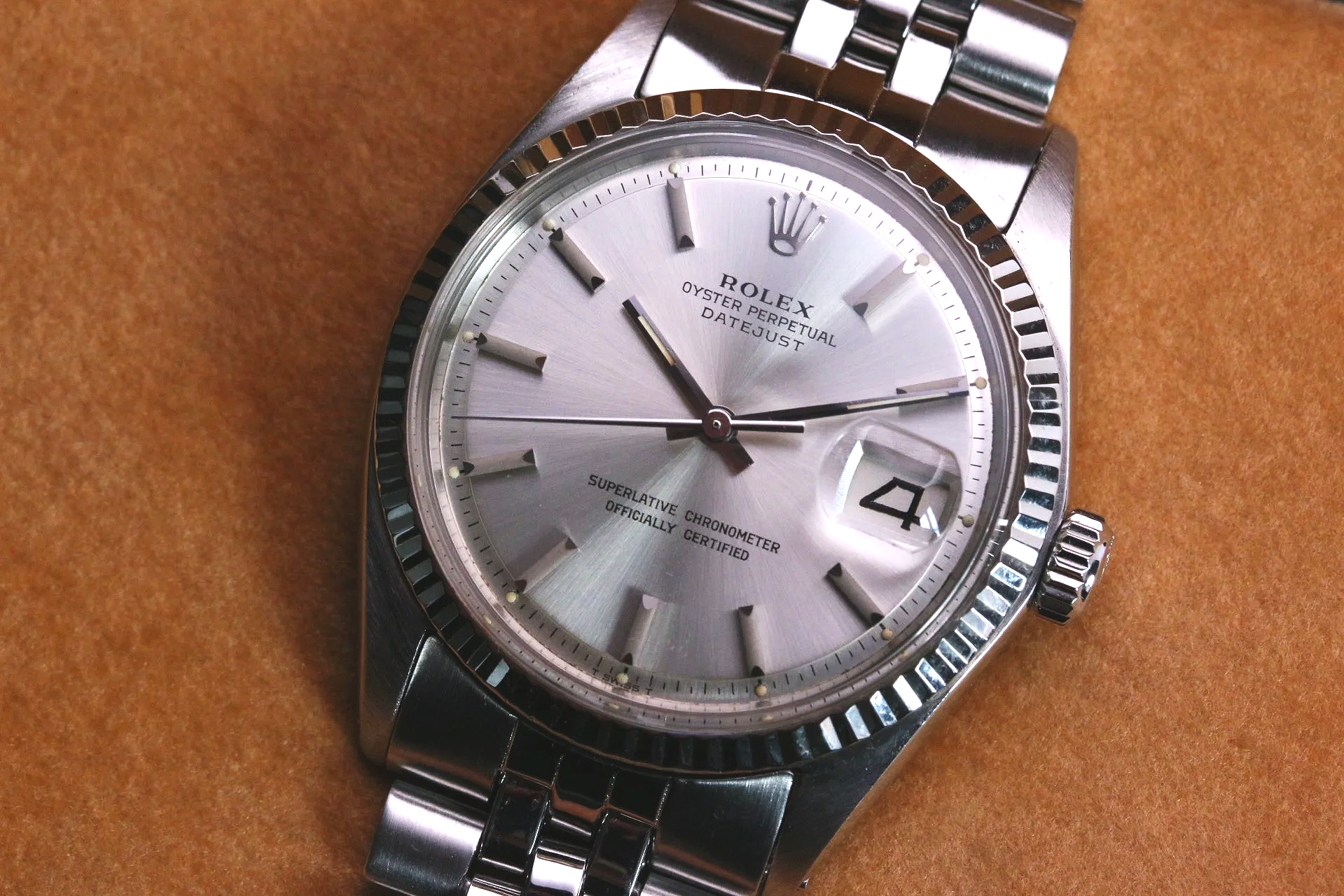
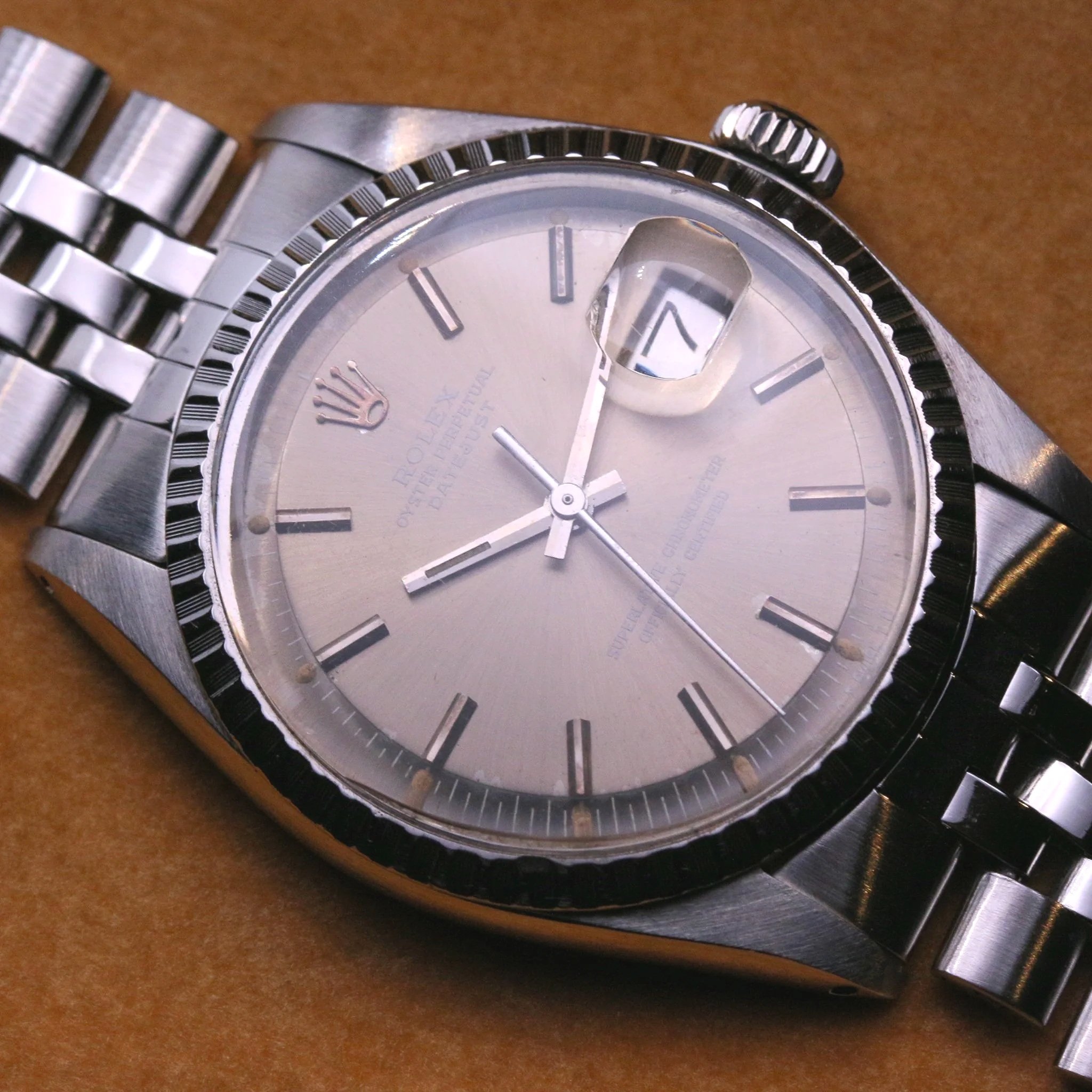
The Rolex 1601 is part of the wider 160x family, alongside closely related Datejust references such as the 1600 and 1603. The main difference between these three references is the bezel. The 1601 is typically fitted with Rolex’s iconic fluted bezel, while the 1600 features a smooth bezel and the 1603 an engine-turned bezel. Of the three, the fluted bezel is by far the most sought-after, although the smooth and engine-turned variants are still just as popular with some collectors.
These references evolved into the next generation of five-digit Datejust models, including the 16014 and 16013. The 16014 retained the classic fluted bezel, while the 16013 showcases the two-tone configuration. This generation also marked the introduction of the quickset date function to the Datejust range, powered by the new Rolex Calibre 3035. The 3035 succeeded the earlier 15xx series and was later superseded by the Calibre 3135.
What to look out for
As with any vintage Rolex, condition and originality are two of the main things to look out for when buying a 1601. The Jubilee bracelet is particularly important. Over time, the holes where the pins sit can wear down, creating play between the links and causing the bracelet to become stretched. A 50-year-old 1601 that has been regularly worn can have significant stretch, while a lightly worn example may remain relatively tight. This can have a noticeable impact on both the watch's appearance and value. These can be re-pinned, so if you own a Jubilee bracelet with some stretch, it’s not something to overly about.
Originality is another key factor. Dials and hands can be replaced during servicing and during other occasions, so finding an example with its original components is preferable. Natural patina on the dial and hands that appear consistent with the watch's age can be a great sign. Ideally, collectors look for a watch that has been well maintained but retains as many of its original parts as possible.
My Thoughts
I’m overall a big fan of the 1601. With so many configurations available, you could almost build an entire collection around the reference. It’s relatively accessible in its more common forms, while also offering rare and highly sought-after variants at the higher end of the market. I have a soft spot for the classic stainless steel 1601 with its understated fluted bezel. The solid gold variants, particularly the more subtle white gold examples, are especially appealing, although they less frequently come up for sale.
Like many vintage Rolex enthusiasts, I’m also a big fan of stone dials, so my grail 1601/9 would be a white gold example with a lapis lazuli or onyx dial. Both are incredibly rare and offer something completely different from the more conventional Datejust configurations. Lapis lazuli is a blue metamorphic rock that has been prized for thousands of years. Its name comes from the Latin lapis, meaning “stone”, and the Persian lazhward, meaning “blue”. Onyx is a variety of chalcedony known for its deep, uniform black appearance. Rolex used sections with an especially consistent colour, creating an almost uninterrupted black surface.
Ultimately, that’s what makes the 1601 such a special reference: whether you’re drawn to the simplicity of a classic steel example, the luxury of solid gold, or the rarity of a stone dial, there’s a 1601 for almost every type of collector. It’s a reference with plenty of history, variety and character, and one that I think will continue to hold a special place in the world of vintage Rolex for years to come.