From Track to Wrist
Some people say that cars and watches go hand in hand, and I’m definitely one of those people who agrees with that statement. I’ve always been a fan of cars, and it’s something that has stayed with me for as long as I can remember. Spend time around car enthusiasts and you’ll often notice that many of them also share a passion for watches. There seems to be a natural connection between the two worlds - where cars are appreciated, watches are rarely far behind. Part of this link comes from a shared appreciation for engineering and craftsmanship. Both cars and watches rely on intricate mechanics designed with precision and care. Whether it’s the movement inside a watch or the complex parts under the bonnet of a performance car, there’s something fascinating about seeing so many components working together perfectly. Then there’s the element of luxury and prestige. High-end cars and luxury watches both represent a certain level of status and aspiration, which naturally draws people who appreciate quality and craftsmanship.
Now, it’s not just enthusiasts and the general public who create this connection between the two worlds - the watch brands themselves play a huge role in strengthening it. Over the years, countless luxury watch models have been directly linked to the motorsport world, with many originally designed to be used by racing drivers as practical “tool watches.” One of the most well-known examples is the Rolex Daytona. The Daytona takes its name from the famous Daytona International Speedway in Florida, a circuit long associated with speed and endurance racing. The first Daytona, the iconic reference 6239, marked the beginning of what would become one of Rolex’s most celebrated models. The watch was produced with a tachymeter scale on the bezel, allowing racing drivers to measure average speeds over a known distance - a useful function in the days before modern digital timing systems. Interestingly, the word “Daytona” didn’t appear on the dial until 1965. In the years before that, Rolex’s chronograph line was simply known as the “Cosmograph.” Today, the Daytona is less commonly used by professional racers, but its deep roots in motorsport continue to shape the model’s identity. A great modern example is the Le Mans Daytona, produced as a tribute to the 100th anniversary of the legendary 24 Hours of Le Mans endurance race. The watch was released in a series of precious metals - first in white gold, followed by yellow gold and later rose gold - celebrating both the heritage of racing and Rolex’s ongoing connection to the sport.
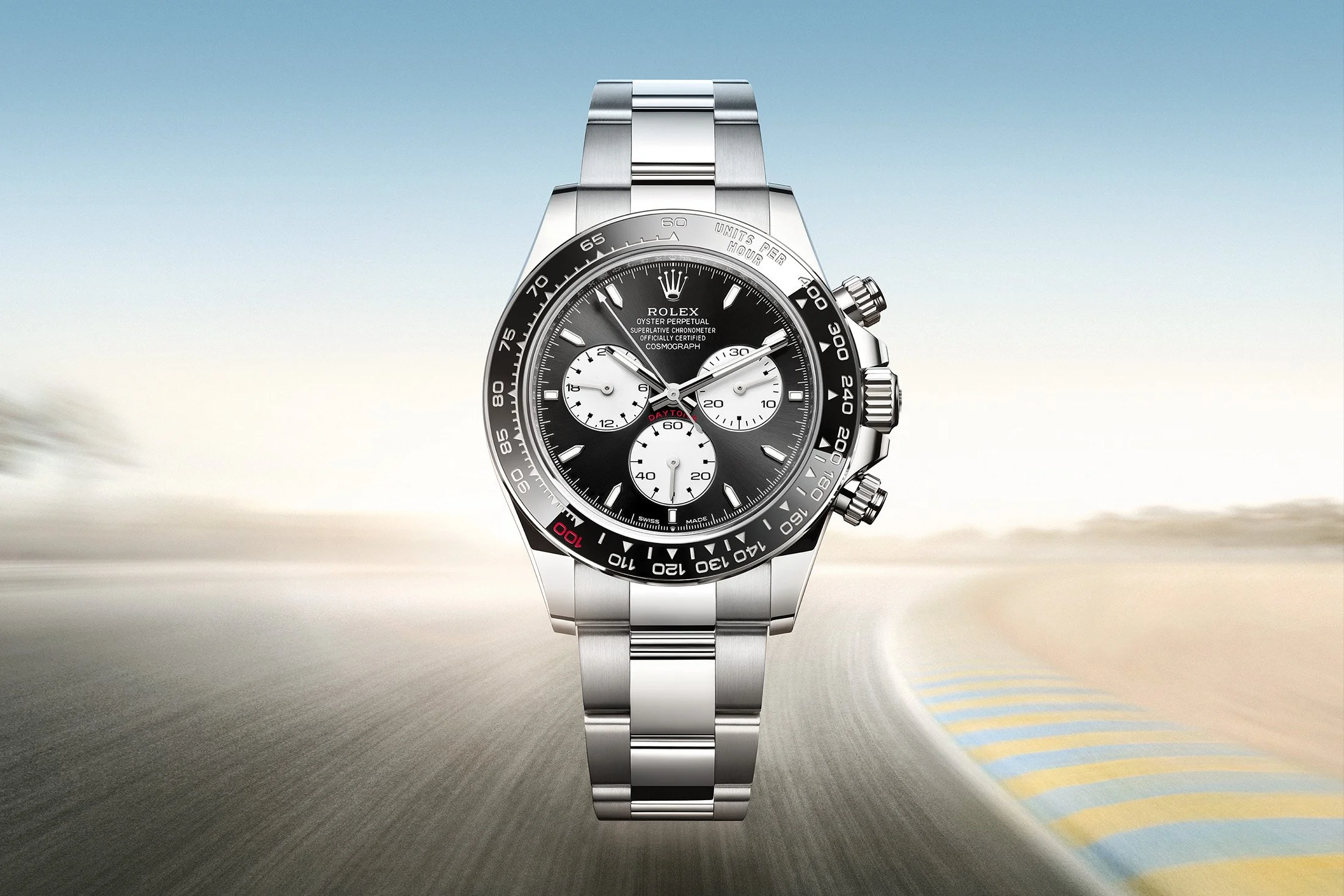
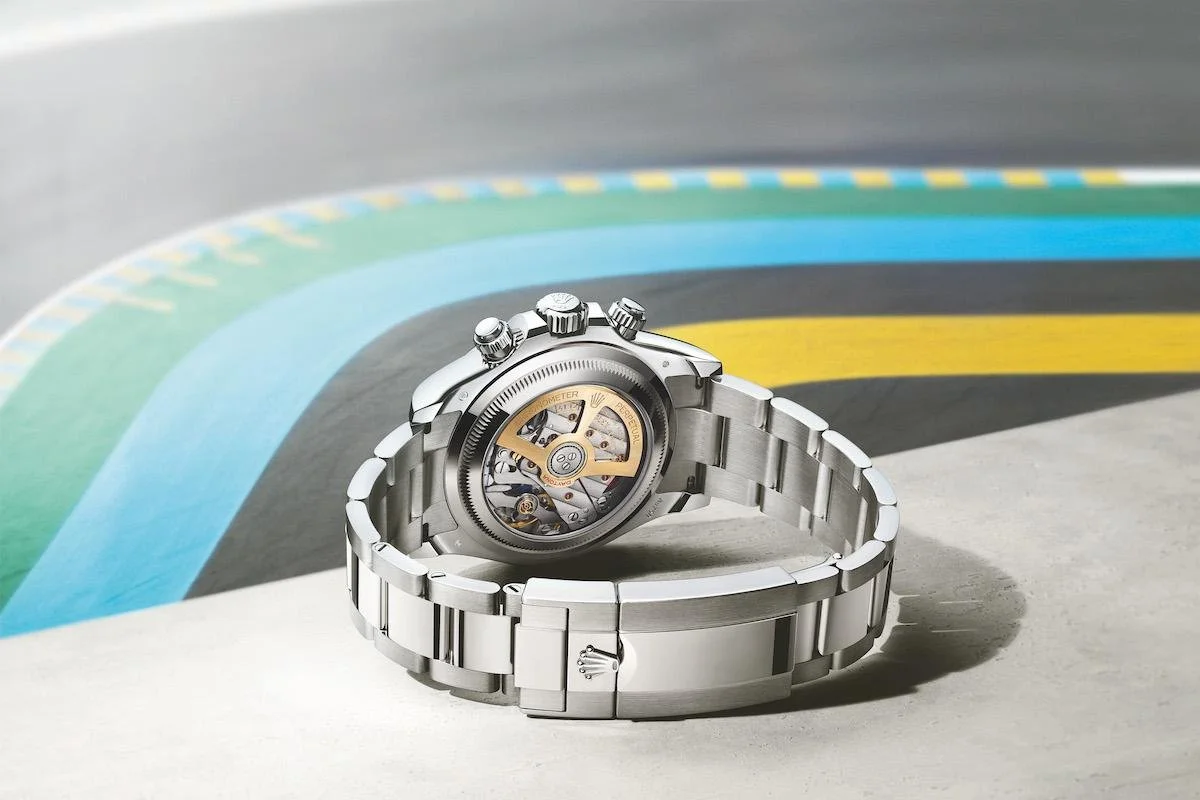
At its debut, this watch had a list price of roughly £38,800 when purchased directly from Rolex. However, on the secondary or “grey” market today, prices can easily exceed £150,000 depending on the specific year and material. This represents a huge increase over its original retail value and highlights just how desirable the model has become among collectors.
Of course, Rolex isn’t the only brand with strong ties to motorsport. Other major names such as Omega, TAG Heuer, Richard Mille and Tudor have all built deep connections with the automotive and racing worlds. One watch that certainly deserves a mention is the Omega Speedmaster. While many people now associate the Speedmaster with its role in space exploration and the moon landings, the model was actually originally designed with motorsport in mind, much like the Daytona, featuring a chronograph function and tachymeter scale intended for timing and measuring speed.
THE LINK TO FORMULA 1
Of course, it would be impossible to write a blog about cars and watches without mentioning the role watch brands play in the world of Formula 1. One of the most recognisable names in this space is TAG Heuer, which currently serves as the official timekeeper of Formula 1. The brand has a long history in the sport and was actually the first luxury watch company to have its logo featured on a Formula 1 car back in 1969.
At the very top end of the luxury watch market, another name often comes to mind - Richard Mille. Known for their bold designs, cutting-edge materials, and incredible watchmaking precision, Richard Mille watches feel perfectly suited to the high-performance world of Formula 1. The brand began its journey in the sport in 2016 and is currently partnered with both the McLaren Formula 1 Team and Scuderia Ferrari. A big part of these partnerships involves the creation of special edition timepieces inspired by the teams and their cars. A personal favourite of mine is the Richard Mille RM 43-01, created in collaboration with Ferrari. The watch is extremely limited, with only 75 pieces produced in carbon and another 75 in micro blasted titanium and carbon. On the wrist, it genuinely feels like wearing a hyper car, both in terms of its design and its technical complexity. It also features an impressive power reserve of around 70 hours. One particularly interesting feature is the function indicator, which shows the position of the crown by displaying W (winding), N (neutral), or H (hands). Small details like this highlight the technical focus that Richard Mille brings to its watchmaking. The design also draws clear inspiration from Ferrari’s automotive styling. For example, the pushers resemble the rear lights of the Ferrari SF90 Stradale, which is a very cool touch. Many elements of the watch echo the sharp lines and aggressive design language seen in Ferrari models, making the connection between the watch and the car brand unmistakable. Even the smallest components are carefully engineered. Some of the screws used in the watch are made from grade 5 titanium, allowing for more precise control of the torque applied during assembly. It’s details like these that show just how seriously both engineering and performance are taken in a watch like this.
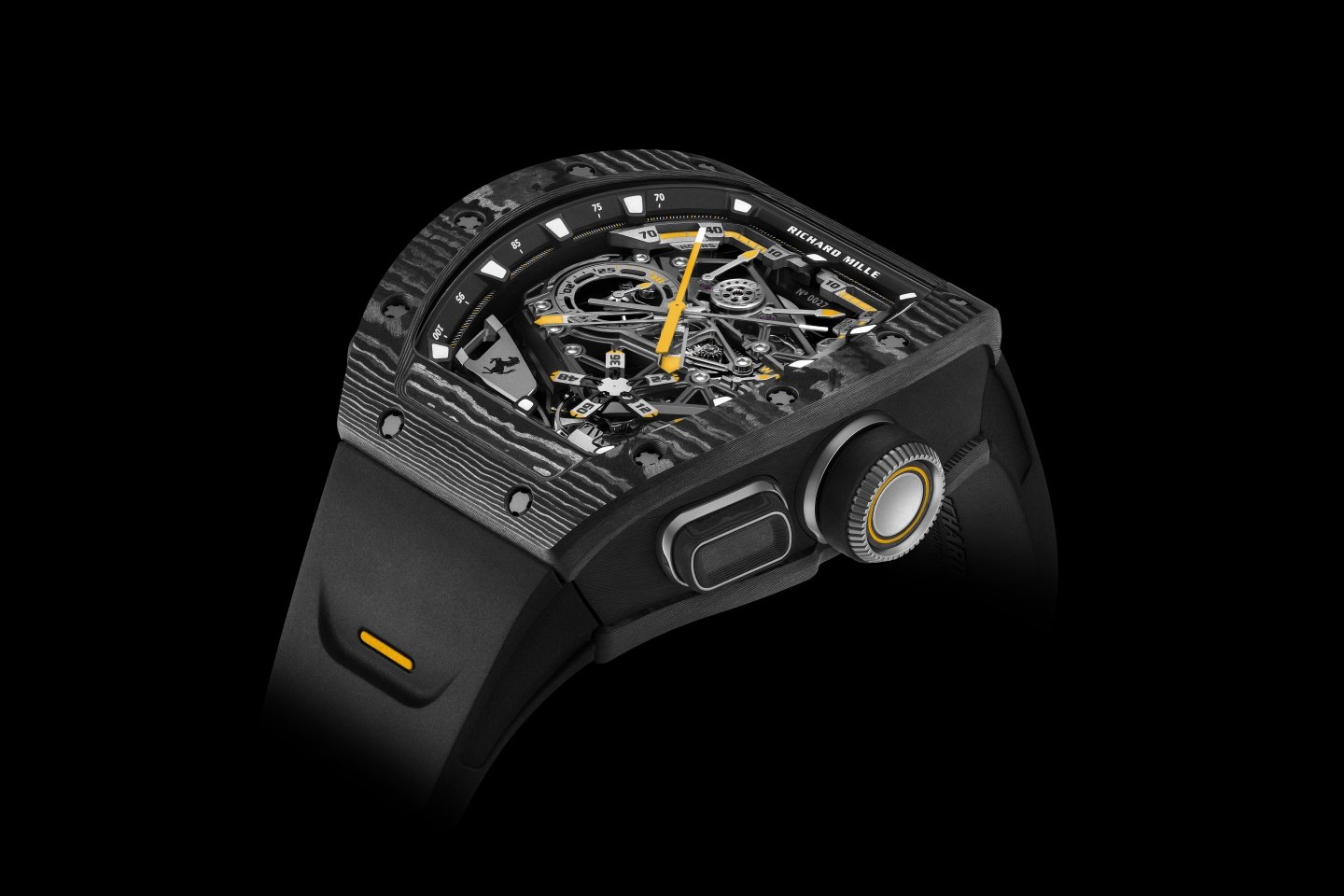
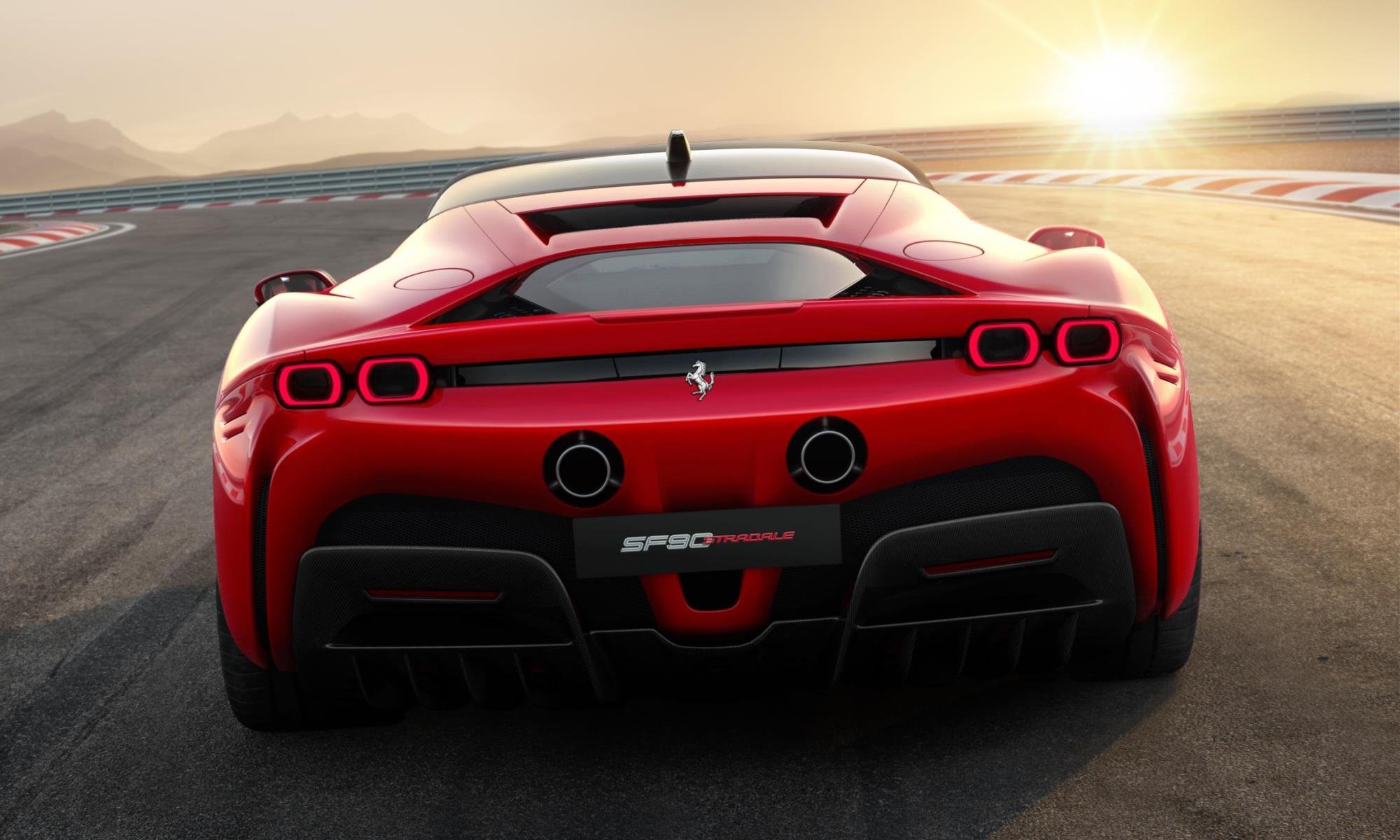
It’s clear that there is a strong and long-standing link between the worlds of cars and watches. This connection exists from both the manufacturer’s perspective and the enthusiast’s perspective, and it’s something that has developed over decades. Watch brands continue to draw inspiration from motorsport and automotive design, while car enthusiasts often find themselves equally fascinated by the precision, engineering, and craftsmanship found in watchmaking.
Looking ahead, it does raise an interesting question about the future of this relationship. As the automotive industry shifts more towards electric vehicles, will this change the way enthusiasts connect with cars? Part of the passion for cars has always come from the mechanical experience - the engines, the sounds, the moving parts. If that begins to change, could it also influence the shared enthusiasm between cars and watches? Or will the appreciation for design, performance, and engineering continue to keep the two worlds closely linked?
Only time will tell.
As I wrap up this blog, I’ll leave you with that thought - and one final note. If you’re someone who loves cars and also enjoys the world of watches, then we already have something in common. I’m always happy to chat about track days, watch movements, and everything in between. And who knows… you might even find a watch you like along the way.